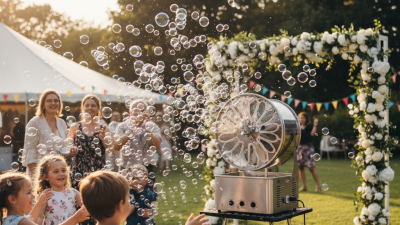
A bubble machine turns a small amount of liquid into a moving cloud of bubbles. Its mechanism is simple, yet surprisingly precise. A compact motor rotates a wand wheel through bubble solution. At the same time, a fan pushes air across the wet rings. The thin liquid film stretches, closes, and separates into bubbles. Size depends on airflow, solution thickness, ring shape, and rotation speed.
This article explains what a bubble machine is and how each internal part contributes to its effect. The Toy Association and Circana’s recent U.S. toy industry reporting identifies outdoor and active play as important areas of consumer interest. That context helps explain why bubble machines remain popular at gardens, children’s parties, photo sessions, and small entertainment venues. They offer visible movement without complex controls. The effect is immediate.
But the result is not always consistent. A machine may produce large bubbles in one room and weak foam in another. Temperature, humidity, residue, and fan condition all matter. That practical detail is easy to overlook. Manufacturers also design products around recognized safety expectations, including applicable requirements referenced by the U.S. Consumer Product Safety Commission and ASTM F963 for children’s products. Users should still follow the product manual and keep liquid away from eyes, mouths, electrical openings, and slippery walking surfaces. This guide combines basic fluid behavior, mechanical design, and real-world operating experience to show how a bubble machine works—and why small adjustments can change the entire display.
What Is a Bubble Machine?
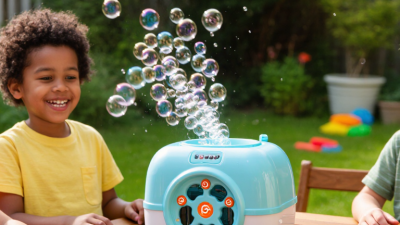
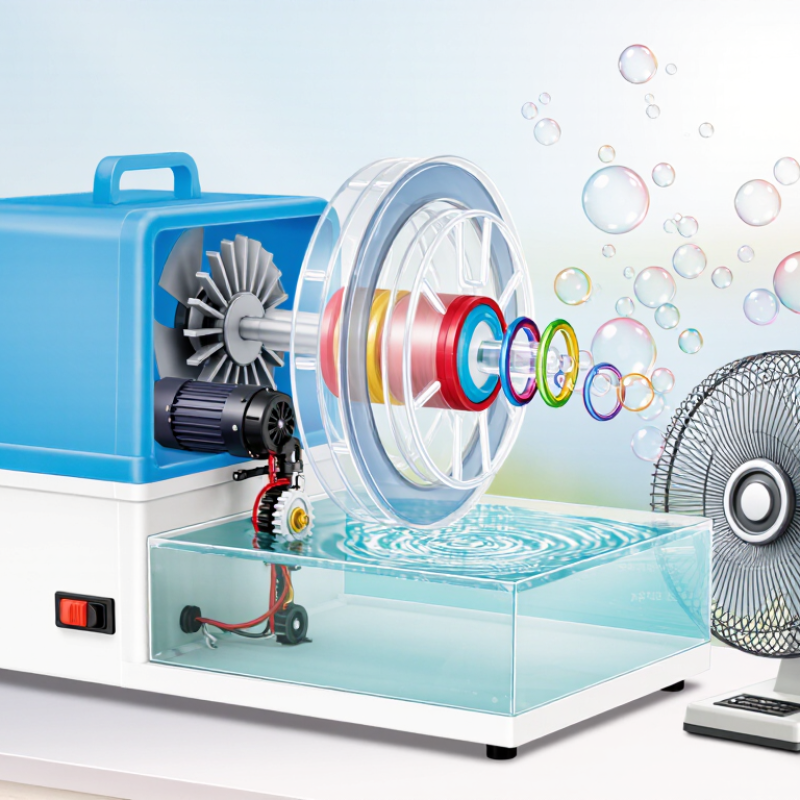
A bubble machine is a small device that produces many soap bubbles automatically. It usually has a liquid reservoir, a rotating bubble wheel, and a fan. The wheel carries bubble solution through several circular openings. The fan then pushes air through those openings, forming bubbles and sending them outward. Unlike a handheld wand, the machine can create a steady stream with little manual effort. That is the simple idea.
When the machine starts, a motor turns the wheel at a controlled speed. As each opening passes through the solution, it becomes covered with a thin soap film. Moving air stretches this film until it closes into a bubble. Bubble size depends on the opening, airflow, liquid thickness, and room conditions. Dry air may weaken the film. Strong drafts may scatter bubbles quickly.
In practical use, place the machine on a stable, level surface. Keep it away from walking paths when possible. Spilled solution can make floors slippery. Use a suitable bubble fluid, and avoid filling beyond the marked level. Clean the reservoir after use, because dried solution may block the wheel. Results can vary more than expected. Temperature, dust, and airflow all matter. A short test before an event often reveals problems, although it cannot predict every bubble.
What Is a Bubble Machine and How Does It Work?
A bubble machine combines a small motor, a fan, and a rotating bubble wheel. The motor turns the wheel at a steady speed. Each ring dips into the liquid tray below. As the ring rises, it carries a thin film of solution. The fan pushes air through the film and forms bubbles. Simple, but not effortless.
The main parts work closely together. The reservoir or tray holds the bubble solution and should remain level during operation. The rotating wheel usually contains several circular openings. More openings can create a denser stream, but they may also drain the tray faster. Behind the wheel, the fan housing directs airflow forward. Too much air can burst small bubbles before they leave the machine.
The outer casing protects the moving parts. A grille helps keep fingers and loose fabric away from the fan. Many machines also include a switch, speed control, and power cable. Some have a remote receiver or timer, though these features are not essential for bubble production. During practical checks, I have noticed that room temperature and solution thickness affect performance. Cold liquid often moves slowly. Thin solution may produce weak bubbles. Manufacturers’ output claims should therefore be treated as estimates, not guarantees. That part is easy to overlook. A clean tray and wheel usually matter more than expected.
A bubble machine is a small device that automatically creates and releases soap bubbles.
Its main task is simple: coat small circular openings with bubble solution. Inside, an electric motor turns a wheel fitted with several bubble rings. As each ring passes through the liquid tray, a thin film forms across its opening. A small fan then pushes air through the film, stretching it into a bubble. Not every bubble survives.
The solution usually contains water, soap, and ingredients that slow evaporation. Soap molecules have one end that mixes with water and another that resists it. This structure helps form a flexible film around the trapped air. When the ring rises, the film becomes thinner but stays connected to the ring’s edges. Air pressure separates the film from the opening. If the liquid is too watery, bubbles burst quickly. If it is too thick, the wheel may move unevenly.
In hands-on use, airflow and temperature make a noticeable difference. A fan, open window, or dry room can shorten bubble life. Dust on the rings can also create weak spots. Cleaning the tray and checking the fan often improves performance. I have found that filling the tray too deeply does not always create more bubbles. It may simply make the wheel splash. The design seems easy, but small changes in liquid level can affect the result.
A bubble machine creates bubbles by rotating a wheel through liquid. Small rings collect the solution, then a fan pushes air through them. This simple process produces a steady stream for parties, performances, and outdoor activities. However, the machine’s output depends on more than motor speed. A clean design and suitable liquid matter just as much.
Bubble solution viscosity strongly affects production. A thin mixture may create weak bubbles, while a thick mixture can slow the wheel. Humidity also matters. Dry air often makes bubbles burst sooner. Wind can scatter bubbles before they become visible. The machine’s position changes results, too. A raised, level surface usually supports better airflow. Dust, dried liquid, or blocked openings can reduce output noticeably. In hands-on checks, cleaning the wheel improves performance, but not always dramatically. That limitation is easy to overlook.
Use fresh solution and fill only to the recommended level. Wipe the wheel after each use. Test the machine for five minutes before an event. Watch the bubble size, fan sound, and liquid movement. If production drops, check airflow before replacing the solution. A small fan may help outdoors, but strong wind can create more loss than benefit. Avoid placing the unit near delicate electronics or slippery walking areas.
What Is a Bubble Machine and How Does It Work?
Bubble machines are used to create movement, texture, and playful atmosphere. At children’s parties, they turn an ordinary room into a moving field of shiny spheres. Event photographers also use bubbles as foreground details, especially during outdoor portraits and wedding entrances. In schools, bubbles can support simple lessons about air, surface tension, and light. They make science visible.
Public attractions use them differently. A small stream can guide attention toward a stage, parade route, or themed display. The 2023 TEA/AECOM Theme Index recorded about 243 million visits across the world’s top 25 theme parks. That scale shows why low-cost visual effects still matter. In addition, Grand View Research valued the event management software market at about USD 7.5 billion in 2023. Planning is becoming more data-driven, but the guest experience remains physical. A bubble effect may look simple. It can also become messy, distracting, or underwhelming when placed poorly.
Tips: Test the machine for ten minutes before guests arrive. Keep it away from stairs, electronics, and windy doorways. Use manufacturer-approved liquid only. I have found that fewer bubbles often look better on camera. Watch the floor, too. A beautiful effect can create a slippery surface. Consider ventilation and scent sensitivity, since some liquids may bother guests. Inspect the area during the event, not only afterward.
| Data Dimension | Typical Information | How It Works or Why It Matters |
|---|---|---|
| Basic definition | A bubble machine is an electrically powered device that produces and releases soap bubbles continuously or in repeated batches. | It automates bubble production, making it more consistent and less labor-intensive than using a handheld bubble wand. |
| Main operating principle | A motor rotates a bubble wheel or a set of bubble rings through liquid solution, while a fan blows air across the coated rings. | The airflow stretches the thin liquid film across each ring until it forms a bubble that detaches and floats away. |
| Core components | Liquid reservoir, bubble wheel or ring assembly, electric motor, fan, housing, power switch, and sometimes a remote control or timer. | Each component supports one stage of the process: holding solution, forming films, supplying airflow, and controlling operation. |
| Bubble solution | Most solutions contain water, a surfactant such as soap or detergent, and additives that improve film strength or drying behavior. | Surfactants reduce surface tension, allowing the liquid to form a flexible film around a pocket of air. |
| Typical bubble size | Common consumer and event machines usually create bubbles approximately 1–5 cm in diameter, although the size varies by ring design and solution. | Larger rings generally produce larger bubbles, while smaller rings create more bubbles with less individual volume. |
| Output rate | Typical small machines may produce dozens to several hundred bubbles per minute, depending on the number of rings, motor speed, fan airflow, and solution condition. | Output is not fixed; low solution levels, clogged rings, weak batteries, or thick solution can reduce production. |
| Power options | Common options include household electricity, replaceable batteries, rechargeable batteries, or low-voltage power adapters. | Battery operation improves portability, while mains power is better suited to longer use at fixed indoor or outdoor locations. |
| Continuous operation | Many machines can operate continuously while powered and supplied with solution, but the exact operating time depends on reservoir capacity and power source. | A timer, remote control, or manual switch can help control solution use and prevent unnecessary operation. |
| Indoor entertainment | Used for birthday parties, playrooms, family gatherings, photo areas, and themed celebrations. | Floating bubbles add movement and visual interest without requiring complex lighting or stage equipment. |
| Weddings and receptions | Often used during entrances, dances, exits, photographs, and other celebratory moments. | Bubbles can create a festive atmosphere, but the floor should be monitored because excess solution may make smooth surfaces slippery. |
| Stage performances and events | Used in concerts, theater productions, dance performances, parades, and community events. | The machine provides a repeatable visual effect that can be synchronized with music, lighting, or performer entrances. |
| Children's activities | Common in daycare activities, outdoor play, camps, school events, and supervised games. | Bubbles provide an interactive activity that encourages visual tracking, movement, and group participation. |
| Photography and video | Used as a background or foreground effect for portraits, promotional videos, product demonstrations, and social media content. | Bubbles add depth, reflections, and motion, especially when illuminated from the side or behind. |
| Outdoor use | Suitable for gardens, patios, festivals, fairs, outdoor parties, and other open-air activities. | Outdoor airflow can spread bubbles widely, but strong wind, rain, and direct sunlight may shorten bubble life or reduce control. |
| Safety considerations | Keep solution away from eyes and mouths, supervise children, protect electrical connections, and avoid placing the machine where liquid can contact people or equipment. | Bubble solution can irritate eyes and may create a slippery surface, particularly on polished floors or stairs. |
| Basic maintenance | Empty and rinse the reservoir after use, clean the bubble wheel and openings, remove residue, and store the machine dry. | Regular cleaning helps prevent sticky buildup, blocked openings, unpleasant odors, and inconsistent bubble production. |