In 2026, small bubbles are being discussed with greater precision across beverages, water treatment, skincare, and industrial processing. The most visible types include microbubbles, nanobubbles, fine foam bubbles, and controlled carbonation bubbles. Each type behaves differently in water, oil, or air. Size matters, but it is not the only factor.
That distinction matters.
A bubble’s lifetime, surface charge, gas content, and surrounding liquid can change its performance. Microbubbles usually rise slowly and create visible cloudiness. Nanobubbles may remain suspended longer, although measurement methods can produce different results. Fine foam bubbles create a stable layer, while carbonation bubbles often focus on taste, texture, and release speed. These differences help readers compare products without relying on attractive marketing language.
This overview will examine the leading small bubbles expected to attract attention in 2026. It will consider size ranges, formation methods, stability, energy use, and practical applications. Evidence from technical studies, manufacturer specifications, and real operating conditions will guide the discussion. Laboratory results can be impressive, yet field performance may change with temperature, pressure, minerals, and cleaning routines.
One weakness remains.
Bubble terminology is not fully consistent across industries. Some suppliers use “microbubble” and “fine bubble” interchangeably, which can confuse buyers. A careful comparison should therefore check measurement standards, test conditions, and claimed benefits. The goal is not to label one type as universally best. It is to identify the right small bubbles for each realistic application.
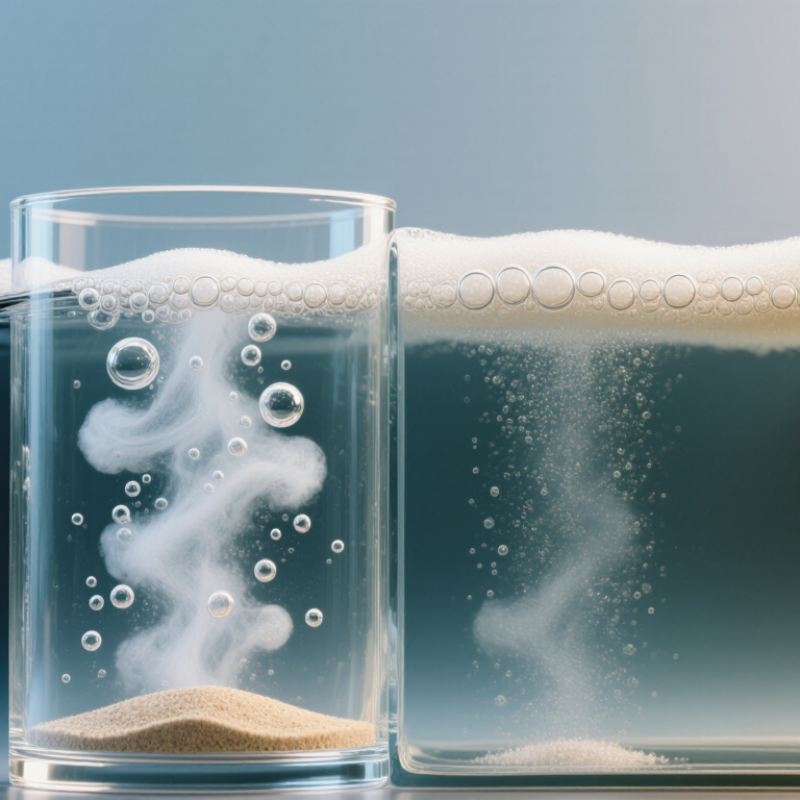
Small bubbles are not one uniform technology. Under ISO 20480-1:2017, fine bubbles measure below 100 micrometres. Microbubbles usually range from 1 to 100 micrometres, while ultrafine bubbles measure below 1 micrometre. That distinction matters. Smaller bubbles rise more slowly, expose greater surface area, and can remain suspended longer. Their performance also depends on gas type, water chemistry, pressure, and temperature.
The main 2026 categories are microbubbles, ultrafine bubbles, and hybrid bubble systems. Microbubbles support flotation, aeration, and separation because they provide strong gas-liquid contact. Ultrafine bubbles behave differently. Their low buoyancy may help them persist in treated water, although persistence claims require careful testing. The UN World Water Development Report 2024 notes that agriculture uses about 70% of global freshwater withdrawals. This pressure is increasing interest in efficient aeration and water-treatment methods. FAO AQUASTAT data also shows major differences between regions, so one bubble size cannot suit every site.
Measurement remains imperfect. Optical instruments may count particles, droplets, or unstable bubbles together. A laboratory result may also change in a working tank. Real operators should record bubble-size distribution, dissolved oxygen, gas flow, and treatment time. Many articles focus only on diameter. That is incomplete. Bubble lifetime, surface charge, and operating cost often decide whether a system performs well outside controlled testing.
In 2026, the main small-bubble types are microbubbles, ultrafine bubbles, foam bubbles, and cavitation bubbles. Their structures differ sharply. Microbubbles usually measure about 10–100 micrometres. They have a visible gas core and a mobile liquid interface. Ultrafine bubbles are commonly below 1 micrometre. Their high surface-area-to-volume ratio supports longer suspension in water.
Foam bubbles are larger, closely packed, and separated by thin liquid films. Their shape becomes polyhedral as neighboring bubbles press together. Cavitation bubbles form when local pressure drops quickly. They expand, distort, and collapse with strong energy release. A 2024 microbubble-generator market report identifies wastewater treatment as a leading application segment. This demand reflects the need for better gas transfer and compact equipment. However, size classifications are not perfectly consistent. Sampling pressure, temperature, and imaging methods can change reported measurements. The 2024 World Water Development Report also highlights rising pressure on water systems, making bubble efficiency increasingly important.
Tips: Check the measurement method before comparing suppliers or studies. Laser tracking may show a different distribution than optical microscopy. In testing, record water temperature, dissolved gas, and residence time. Small details matter. I have seen stable-looking bubbles disappear after a minor pressure change. That result is easy to overlook, but it can change the process design.
Main Types of Small Bubbles and Their Structural Differences
Typically below 1 μm. Their very high surface-area-to-volume ratio and low buoyancy can support longer residence times in water.
Usually 1–100 μm. They provide a large gas–liquid interface while remaining small enough for relatively slow rising and efficient mass transfer.
Approximately 100–1,000 μm. They rise faster, coalesce more readily, and generally have a lower surface-area-to-volume ratio than smaller bubbles.
The chart uses representative diameters of 0.5, 50, and 550 μm on a logarithmic scale. Size boundaries are commonly used engineering ranges and may vary slightly between technical standards and applications.
What Are the 2026 Top Types of Small Bubbles?
Small bubbles are commonly classified by diameter, but the boundaries are not perfectly fixed. Microbubbles often measure below one millimeter and remain suspended in water longer than larger bubbles. Submicron bubbles are smaller still, sometimes approaching the nanoscale. They are difficult to observe directly, so researchers use optical imaging, pressure testing, and particle-size analysis. Measurement conditions matter. Temperature, dissolved gas, and water chemistry can change the result.
Shape provides another useful classification. Freshly formed bubbles are usually spherical because surface tension pulls evenly around their surfaces. Near a wall, they may become flattened or hemispherical. In crowded liquid, neighboring bubbles can form polygon-like foam cells. Irregular bubbles often indicate turbulence, contamination, or unstable pressure. That clue is useful, though not always decisive.
Function separates small bubbles into practical types. Aeration bubbles transfer gas into water, while flotation bubbles attach to selected particles and lift them. Cleaning systems may use fine bubbles to create local movement near surfaces. Mixing applications favor bubbles that circulate through narrow spaces without rising too quickly. Some systems also use stable bubbles for controlled gas delivery. In real equipment, bubble size can drift during operation. That limitation deserves attention. A laboratory result may not match field performance. Reliable classification therefore combines size, shape, lifetime, and measured function rather than relying on diameter alone.
| Bubble Type | Typical Diameter | Size Classification | Typical Shape | Stability in Water | Primary Function | Common Applications | Typical Measurement Methods |
|---|---|---|---|---|---|---|---|
| Nanobubbles | Less than 1 µm | Nanoscale | Approximately spherical; shape is strongly affected by surface tension and interfacial chemistry. | Relatively high apparent persistence in bulk liquid compared with larger bubbles; behavior depends on gas type, water chemistry, and surface conditions. | Increase gas–liquid interfacial area and support gas transfer, particle interactions, and oxidation or flotation processes. | Water treatment research, aquaculture oxygenation, flotation, cleaning, and gas-transfer studies. | Nanoparticle tracking analysis, dynamic light scattering, resonant mass measurement, and optical or acoustic methods. |
| Submicron Bubbles | 0.1–1 µm | Submicron | Nearly spherical in dilute liquids; may deform near particles, interfaces, or solid surfaces. | Can remain dispersed for extended periods, although coalescence, dissolution, and attachment are influenced by pressure, temperature, and dissolved substances. | Provide high interfacial area for gas exchange, surface attachment, and contaminant separation. | Advanced aeration, separation processes, laboratory research, and fine-particle interaction studies. | Particle-tracking techniques, light-scattering analysis, microscopy, and acoustic spectroscopy. |
| Fine Bubbles | 1–100 µm | Microscale | Mostly spherical when freely dispersed; may become ellipsoidal or irregular near surfaces and in turbulent flow. | Longer residence time than millimeter-scale bubbles, but generally less persistent than nanobubbles. | Improve gas dissolution and mass transfer while maintaining a large gas–liquid contact area. | Water and wastewater aeration, aquaculture, fermentation, flotation, and process-water treatment. | Optical microscopy, laser diffraction, image analysis, and high-speed video. |
| Microbubbles | 10–1000 µm | Microscale | Spherical in low-shear conditions; ellipsoidal or oscillating in flowing liquids. | Moderate persistence; dissolution and rise velocity increase as bubble diameter increases. | Deliver gas efficiently and promote mixing, flotation, and interfacial reactions. | Flotation separation, aeration, cleaning, bioprocessing, and controlled gas delivery. | High-speed imaging, laser diffraction, electrical sensing zone analysis, and optical particle sizing. |
| Ultrafine Bubbles | Typically below 100 µm | Fine to nanoscale | Predominantly spherical when isolated; shape can change because of flow, nearby particles, or surface attachment. | Usually longer-lived than conventional millimeter bubbles because of their small size and low rise velocity. | Enhance gas dispersion, contact area, and residence time in liquid systems. | Industrial water treatment, aquaculture, agricultural water management, cleaning, and research applications. | Optical particle analysis, laser diffraction, particle tracking, and acoustic measurements. |
| Monodisperse Bubbles | A narrow size range, commonly 50–1000 µm | Uniform-size population | Highly consistent spherical bubbles when generated under controlled flow and pressure conditions. | Predictable; lifetime and rise behavior are more uniform than in broad-size bubble distributions. | Provide repeatable gas-transfer, flow, and reaction conditions for process control. | Microfluidics, chemical engineering experiments, calibration, and controlled mass-transfer studies. | High-speed imaging, automated image analysis, laser diffraction, and size-distribution statistics. |
| Polydisperse Fine-Bubble Clouds | Approximately 1–1000 µm across a broad distribution | Mixed-size population | Mixed spherical and deformed shapes; larger bubbles may become ellipsoidal or irregular in turbulent flow. | Variable; smaller bubbles remain suspended longer while larger bubbles rise and coalesce more quickly. | Combine rapid gas transfer from small bubbles with stronger circulation and mixing from larger bubbles. | Large-scale aeration, flotation, wastewater treatment, and industrial mixing. | Optical probes, laser diffraction, image-based sizing, and gas-holdup measurements. |
| Surface-Attached Bubbles | Typically 10–1000 µm at the point of attachment | Interfacial bubble | Spherical-cap, sessile, or flattened spherical shape depending on contact angle and surface wettability. | Potentially persistent while attached; detachment is controlled by buoyancy, flow, vibration, and surface properties. | Promote particle capture, surface nucleation, gas exchange, and localized cleaning or reaction effects. | Flotation, boiling and condensation research, electrochemical systems, and surface-process studies. | Contact-angle measurement, microscopy, interferometry, and high-speed imaging. |
| Oscillating Bubbles | Approximately 10–1000 µm | Dynamic bubble | Periodically expanding and contracting; may show spherical, ellipsoidal, or non-spherical oscillation modes. | Short to moderate lifetime, depending on acoustic intensity, pressure, gas solubility, and surrounding liquid. | Enhance mixing, mass transfer, acoustic streaming, and localized energy delivery. | Ultrasound-assisted processing, sonochemistry, cleaning, and flow-control research. | High-speed imaging, acoustic spectroscopy, hydrophone measurements, and optical scattering. |
| Reactive Gas Bubbles | Typically 10–1000 µm | Function-defined | Usually spherical or ellipsoidal; shape changes as gas dissolves or reacts at the interface. | Depends on gas solubility, reaction rate, liquid composition, temperature, and pressure. | Transfer a reactive gas into liquid and support oxidation, reduction, pH control, or biological metabolism. | Oxygenation, ozonation, carbon-dioxide transfer, fermentation, and chemical processing. | Dissolved-gas sensors, gas chromatography, optical imaging, pressure analysis, and mass-transfer calculations. |
Note: Bubble-size boundaries vary among scientific, engineering, and regulatory sources. Bubble diameter, gas type, liquid properties, pressure, temperature, and measurement method can substantially affect classification and observed behavior.
Small bubbles are becoming more specialized in 2026. Microbubbles, usually visible as fine white clouds, support water treatment, flotation, aquaculture, and industrial cleaning. Their larger surface area improves gas transfer and helps separate suspended particles. In aquaculture tanks, operators can distribute oxygen through water with less turbulence. That matters for young fish and sensitive species. Results still depend on bubble size, pressure, temperature, and water chemistry.
Nanobubbles, often grouped with ultrafine bubbles, are much smaller and can remain dispersed for longer periods. Their leading applications include irrigation, hydroponic systems, wastewater polishing, and food-processing water management. Farmers may use oxygen-rich water around roots to encourage healthier growing conditions. Treatment facilities can also study these bubbles for oxidation and contaminant control. Evidence varies between systems, however. A laboratory result may not survive a crowded, dirty tank.
Hybrid bubble systems combine microbubbles and nanobubbles for different tasks. Microbubbles transfer gas quickly, while smaller bubbles may support longer contact with water. This combination appears useful in aquaculture, surface washing, and resource-efficient manufacturing. Equipment designers now focus on sensors, stable generators, and measurable performance rather than impressive bubble counts. Bubble size is not always reported consistently. That is a real weakness. Buyers should request test methods, gas concentration data, energy use, and operating conditions before choosing a system. Bigger claims need better measurements.
In 2026, the main small-bubble types include microbubbles, ultrafine bubbles, and nanobubbles. Microbubbles rise slowly and suit aeration, flotation, and mixing tasks. Ultrafine bubbles remain suspended longer, supporting oxygen transfer in water systems. Nanobubbles are extremely small, but measurement methods can produce inconsistent results. The labels overlap.
Selection should begin with the liquid, target gas, bubble lifetime, and operating pressure. Measure bubble size with a stated method, not a promotional chart. Ask for dissolved oxygen data, energy use, flow rate, and maintenance records. A clear water sample may behave differently from wastewater, oil, or mineral-rich water. Size is not everything.
Small bubbles can improve gas distribution, reduce dead zones, and support more efficient treatment in carefully controlled systems. They may also reduce visible turbulence, which helps delicate aquatic environments. However, generators can consume substantial energy and require clean filters, stable pumps, and regular inspection. Results can drift when temperature, salinity, or organic matter changes. Nanobubble claims deserve extra scrutiny because direct comparisons are difficult. Pilot testing with baseline measurements remains the most dependable approach. Even then, one successful trial should not define a complete design. The quietest system may still deliver weak transfer if gas contact time is too short.