Buying toddler toys wholesale can lower unit costs, but a low price alone does not make a smart purchase. Buyers must balance age suitability, durability, supplier consistency, and the needs of the children who will use each product. A carton may look appealing in a catalog; the toy inside still needs careful review.
Child-development educator Fred Rogers offered a useful reminder: “Play is often talked about as if it were a relief from serious learning. But for children play is serious learning.” That idea matters when choosing toddler toys. Look for pieces that invite hands-on exploration, such as chunky stacking cups, textured blocks, or simple pretend-play sets. Check samples for loose parts, rough edges, strong odors, and packaging that is difficult to open. Small details matter.
This guide outlines ten practical checks for wholesale buyers, from evaluating suppliers and requesting samples to comparing minimum order quantities, shipping terms, and return policies. It also considers seasonality, product variety, and how to avoid tying up cash in toys that may not sell. Ask for clear product information and relevant safety documentation, and verify claims rather than relying on a polished listing. Test the sample. Demand can be hard to predict, and even a careful buyer will sometimes misjudge a trend. The goal is not a perfect forecast; it is a more informed purchase, with fewer surprises after the cartons arrive.
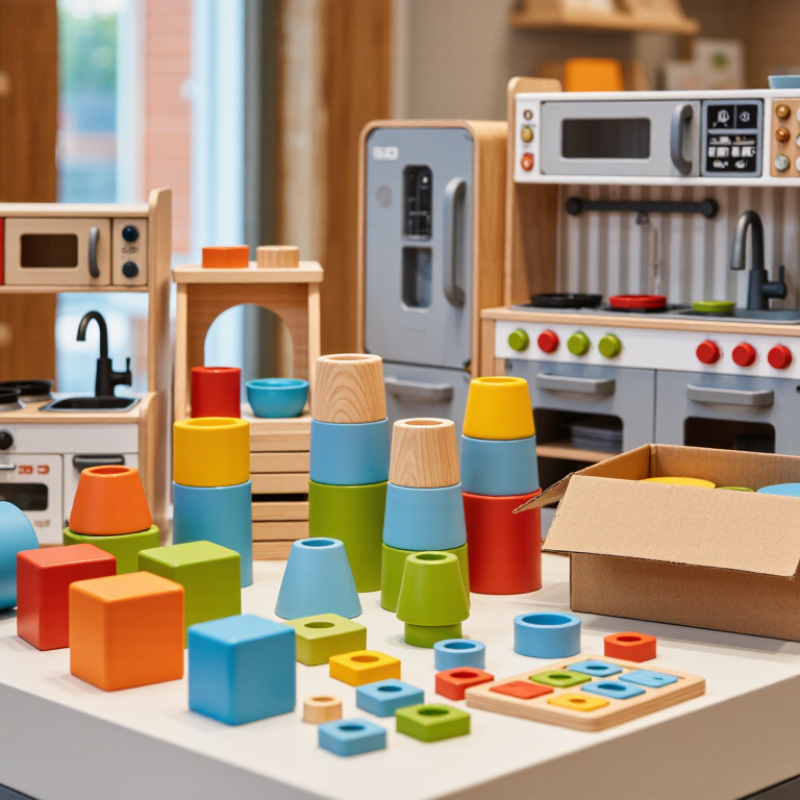
Define your toddler toy range by age, play setting, and buyer. A family shopping for a two-year-old may want chunky puzzles for quiet play, while a daycare may need durable toys that can be cleaned often. Separate these needs before requesting wholesale prices. Small details matter. Consider storage space, piece size, noise, and whether a toy invites solo or shared play. Circana reported that global toy sales declined 7% in 2023, while U.S. toy sales fell 8%. These figures cover the wider toy market, not toddlers alone, so avoid treating them as a direct forecast for your niche.
Then describe your target customer in practical terms: caregivers buying gifts, childcare providers replacing worn play materials, or small retailers serving local families. Ask what age bands they actually shop for, what price range feels manageable, and which play features matter most. A short survey or a few conversations can reveal more than assumptions based on a broad “toddler” label. The Toy Association’s annual trend reporting can help identify changing play interests, but trends do not guarantee local demand. I would test a small assortment first; it is easy to overestimate how many buyers want elaborate toys when simple stacking cups may suit their routines better. Track questions and repeat requests before expanding your order.
A low unit price means little if the supplier cannot show who made the toy or how it was tested. Request the factory’s legal business details, a named quality contact, and recent reports from an accredited testing laboratory. Match every report to the exact model, materials, and age grade you plan to order. A report for a similar-looking toy is not enough.
Check the item.
For U.S. sales, verify applicable requirements, including ASTM F963 and CPSIA, and clarify who issues the required Children’s Product Certificate. Ask for lot codes and a written process for handling defects; these details help trace stock if concerns arise.
The U.S. Consumer Product Safety Commission’s 2022 Toy-Related Deaths and Injuries report estimated 209,500 toy-related emergency-room injuries among children aged 14 and younger. That figure covers U.S. emergency visits, not every incident, but it shows why small parts, loose seams, and sharp edges deserve close inspection.
Paperwork can still mislead. For a first order, request samples from the production batch, then check labels, stitching, and small components yourself. This takes time, and it is easy to skip when deadlines are tight. Do not treat a certificate as proof that every shipment is identical.
When buying toddler toys wholesale, inspect a sample before placing a large order. Run your fingers along edges and seams; rough spots can irritate small hands. Check that attached pieces feel secure and that no small parts come loose with gentle handling. Toddlers mouth toys, so material and finish matter. Ask suppliers for current test reports and clear age grading, then verify the documents match the exact product. A polished sales photo is not enough.
Age suitability should be clear on both the packaging and product information. Look for toys designed around toddlers’ coordination and attention, not just bright colors. A puzzle with oversized pieces may suit a young child better than one with tiny accessories. Check warnings for choking hazards and confirm that play instructions are easy for caregivers to follow. Small details matter.
Durability affects both safety and repeat sales. Examine hinges, wheels, fabric seams, and painted surfaces on a sample. If possible, try ordinary play and cleaning; watch for peeling, loose stitching, or parts that stop working. Ask how the item performs after repeated use, and compare answers with independent documentation where available. I can overlook wear on a new sample, so checking it again after handling is worthwhile. No sample predicts every outcome, but a little skepticism can prevent an expensive surprise.
A wholesale price looks simple until freight, packaging, and sample costs appear. Compare the full delivered cost per toy, not just the quoted unit price. A wooden stacking set may cost less per piece, yet arrive in a bulky carton that raises shipping fees. Ask suppliers to list what each quote includes, such as individual boxes, labeling, and inspection. Small details change the math.
Check minimum order quantities against realistic sales, storage space, and cash flow. A supplier may offer a lower price for 1,000 sets, but that discount means little if you can only sell 200 this season. Request pricing at several quantities, such as 100, 300, and 600 units. Then compare the price break with the risk of unsold stock. I would not treat the cheapest quote as the best one.
Payment terms deserve the same attention. Confirm deposits, final-payment timing, accepted methods, and any transaction fees in writing. For example, a 30 percent deposit and balance before dispatch may tie up less cash than full prepayment. Ask when production begins and what happens if a shipment is delayed or an order arrives short. Keep copies of invoices and product specifications, including age guidance and available safety test records. This step can feel tedious. It helps make supplier comparisons more reliable.
Tip 1: Base opening quantities on recent sales, planned promotions, and available shelf space. For each toy type, estimate weekly demand and note how much cash cartons will tie up. Keep a small buffer.
Tip 2: Set reorder points before popular colors or age ranges run low. A bulk discount may look attractive, but slow stock uses valuable space and working capital. Even a careful forecast can miss.
Tip 3: Ask for carton dimensions, dispatch windows, tracking details, and estimated freight before confirming an order. Compare total landed costs, not just unit prices, across realistic order sizes. Check how holidays or split shipments could change arrival dates. Delays happen.
Tip 4: When a shipment arrives, record delivery time, shortages, and any damaged cartons. Those notes can improve your next order plan.
Tip 5: Agree on a clear contact path for reorder questions, product documents, and damage claims. Ask who handles each issue and how quickly you can expect a reply. Keep notes.
Tip 6: Review delivery reliability and supplier response times after a few orders, then adjust forecasts and reorder timing. Support matters after payment, too. If any terms seem unclear, pause and clarify them in writing.