Little toys have become surprisingly powerful products in the global consumer market. Their appeal reaches children, collectors, parents, travelers, and design-conscious adults. A tiny animal figure can sit beside a laptop, while a miniature vehicle may fit neatly inside a pocket. This physical convenience makes little toys easy to display, store, exchange, and gift. They rarely require complicated instructions. That simplicity matters across different languages and shopping habits.
From a retail perspective, little toys often combine accessible pricing with strong visual identity. Bright colors, recognizable characters, soft textures, and small surprises encourage impulse purchases. Online videos also make these products easy to demonstrate. A hand opening a tiny package can create curiosity within seconds. Collectors may return for new designs, seasonal releases, or limited themes. However, popularity is not based on novelty alone. Buyers often seek comfort, nostalgia, creativity, or a small sense of ownership during stressful routines.
Consumer behavior research and everyday retail observations suggest that portability is a major advantage. Small products suit crowded homes and international shipping systems. They can cross cultural boundaries without depending heavily on written language. Still, the explanation is not complete. Some trends may fade quickly, and not every buyer values collecting. Product quality, safe materials, honest descriptions, and responsible packaging remain essential. A charming toy should also survive ordinary handling, not merely photograph well. Understanding this balance helps explain why little toys continue attracting global buyers, while reminding sellers that emotional appeal must be supported by trust.
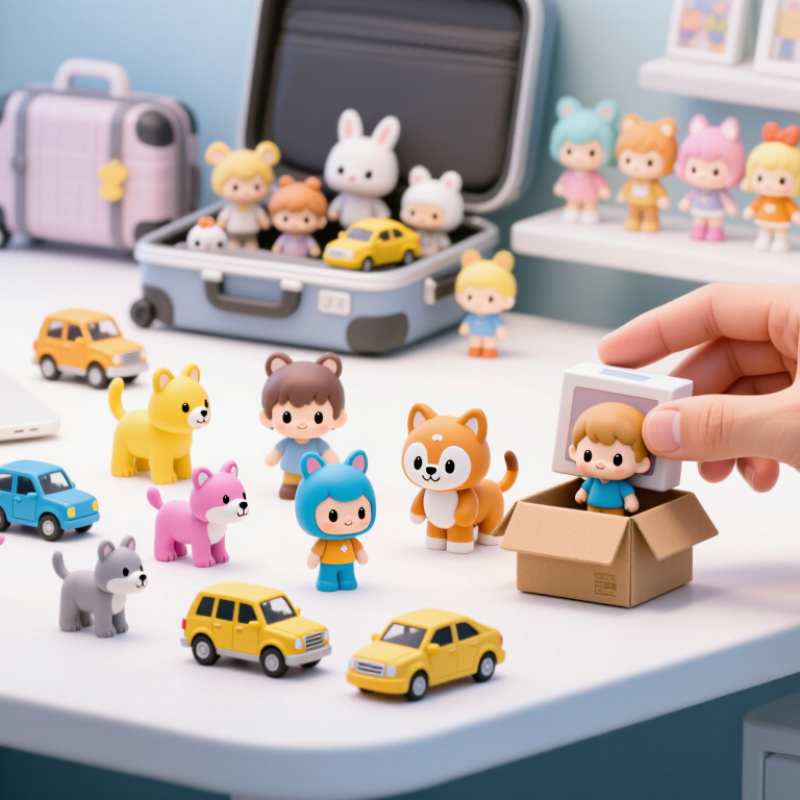
In the global market, “little toy” is a practical retail term, not a universal legal category. It usually describes compact toys with small dimensions, portable packaging, and accessible prices. Think palm-sized figures, miniature playsets, pocket puzzles, and small collectible items. Some encourage open-ended play. Others mainly support collecting, gifting, or decoration.
Size alone is not enough. Exporters must also check the toy’s function, materials, age grading, and packaging. Customs authorities may classify the same product differently across markets. A tiny package does not guarantee simple compliance. That distinction matters.
Grand View Research’s 2024 Toys Market report estimated the global toys market at about 108.7 billion US dollars in 2023. It also projected a 4.5% compound annual growth rate from 2024 to 2030. This growth creates room for small-format products, but the category boundary remains fuzzy. I would not treat every small figure as a little toy.
Tips: Measure the product and package separately. Record material, intended age, play function, and included parts. Check destination-market safety rules before setting a price. Reviewers and buyers also notice tactile details, such as a firm hinge, smooth edges, or packaging that fits a child’s hand. These details can influence trust more than a low price. The data suggests opportunity, but product definitions still need careful judgment.
Why Are Little Toys So Popular With Global Buyers?
Small toys speak to different ages without requiring much space. A child may enjoy a bright animal figure during quiet play. A teenager may attach a tiny charm to a school bag. Adults often place miniature models beside a monitor, where a five-minute break feels less ordinary. Older buyers may value familiar shapes that recall childhood rooms, local festivals, or family traditions.
Cultural preferences also influence these choices. In some markets, buyers favor playful colors and cute characters. Elsewhere, simple wooden forms or realistic details feel more meaningful. Small toys are easy to carry, exchange, and give as modest gifts. They can cross language barriers. Still, sellers should not assume that one design fits everyone.
From product reviews and retail feedback, practical details strongly affect trust. Buyers look for clear age guidance, durable materials, secure parts, and honest photographs. Parents usually check whether a toy is suitable for younger children. Collectors care about finish, scale, and storage. These concerns vary, but careful product information helps across regions. Tiny size can be a weakness, too. A piece may disappear under a sofa or frustrate children with limited hand control. I once underestimated how much packaging affects the experience. Less packaging seemed better, yet fragile items arrived damaged. Small toys are appealing, but thoughtful design matters more than size alone.
How Small Toys Appeal to Different Age Groups and Cultures
| Age Group | Main Developmental Appeal | Small-Toy Formats | Why Buyers Respond | Cultural Adaptation | Evidence Base |
|---|---|---|---|---|---|
| 0–2 years | Sensory exploration, grasping, object permanence, and early cause-and-effect learning. | Soft blocks, textured objects, stacking pieces, rattles, and simple push-and-pull toys. | Compact products are easy to hold, store, clean, and carry. Parents commonly value toys that support safe exploration without complicated instructions. | Colors, sounds, materials, and symbols can be adjusted to local safety expectations, household routines, and caregiver preferences. | World Health Organization, Guidelines on Physical Activity, Sedentary Behaviour and Sleep for Children Under 5 Years of Age, 2019; UNICEF early childhood development guidance. |
| 3–5 years | Imaginative play, language development, role-play, emotional expression, and basic social cooperation. | Miniature figures, pretend-play accessories, animal toys, vehicles, puzzles, and simple construction sets. | Small toys allow children to create stories, repeat activities, and play independently or with caregivers. Their low physical footprint also suits homes with limited storage. | Stories and characters can reflect local animals, occupations, family structures, festivals, clothing, food, and everyday environments. | UNICEF, Learning Through Play; American Academy of Pediatrics, clinical guidance on the importance of play in early childhood. |
| 6–8 years | Rule-based play, problem-solving, fine-motor coordination, collecting, and cooperative interaction. | Building pieces, board-game components, skill toys, miniature vehicles, craft kits, and themed play sets. | Buyers often look for toys that combine entertainment with challenge. Small formats make it possible to expand a collection gradually rather than purchase one large item. | Rules, visual instructions, reading level, humor, and story themes may need translation or localization. Play can be individual, sibling-based, or group-oriented depending on family norms. | UNICEF and The LEGO Foundation, Learning Through Play: A Review of the Evidence, 2018; child-development research on play, executive function, and social learning. |
| 9–12 years | Mastery, strategy, creativity, identity formation, peer belonging, and more complex systems of rules. | Collectible miniatures, puzzles, model kits, science-related toys, trading-style games, and customizable accessories. | Portable toys support social exchange at school, during travel, and at home. Collecting also creates visible progress and encourages repeat engagement. | Local history, mythology, sports, design styles, and school culture can influence which themes feel meaningful or desirable. Certain symbols may require cultural review. | UNICEF, The State of the World’s Children; UNESCO guidance on age-appropriate, inclusive, and culturally relevant learning materials. |
| 13–17 years | Self-expression, belonging, fandom-related identity, design interest, competition, and creative experimentation. | Mini collectibles, desk toys, customization pieces, model-making supplies, strategy items, and small decorative objects. | Small products are relatively affordable, easy to display, and suitable for personal spaces. They can function as hobby objects, conversation starters, or gifts from peers and relatives. | Popular themes vary with regional media habits, language, aesthetics, social values, and gift-giving traditions. Neutral designs can travel more easily across markets. | World Health Organization, adolescent health resources; UNESCO materials on youth participation, identity, creativity, and cultural expression. |
| 18 years and older | Nostalgia, stress relief, craftsmanship, collecting, decoration, social connection, and personal interests. | Miniature models, puzzles, artisanal objects, desk accessories, blind-box-style formats, and nostalgia-inspired toys. | Low-cost, compact items reduce purchase risk and fit easily into apartments, offices, luggage, and gift packages. Adults may also buy them to reconnect with childhood memories or support a hobby. | Nostalgia is strongly shaped by generation and region. Local craft traditions, holidays, folklore, architecture, food, and historical objects can make miniature products more emotionally relevant. | World Health Organization, healthy ageing resources; research literature on nostalgia, leisure activities, collecting, creativity, and social connectedness. |
| Cross-age appeal | Shared attention, storytelling, tactile interaction, gifting, and collection-building. | Modular sets, miniature environments, puzzles, family games, craft objects, and decorative collectibles. | A small toy can be inexpensive enough for an impulse or seasonal purchase while still offering repeat play, display value, or a shared activity between generations. | The strongest localization opportunities usually involve language, cultural symbols, celebrations, color meanings, packaging instructions, and age-rating requirements. | UNICEF, WHO, UNESCO, and international child-safety guidance; all product claims should also be checked against the regulations of the target market. |
Note: The age bands describe broad developmental patterns rather than fixed consumer categories. Cultural preferences differ within and between countries, and product safety, labeling, and age suitability must be verified for each market.
Little toys appeal to shoppers because they reduce the financial risk of buying. A small figure can fit beside a checkout basket, inside a gift bag, or in a child’s travel case. The price feels manageable. This matters when household budgets remain under pressure. Grand View Research valued the global toys market at approximately $108.7 billion in 2023. Its report forecasts a 4.6% compound annual growth rate from 2024 to 2030. Smaller products can support this growth by offering accessible entry prices.
Circana’s global toy industry reviews have repeatedly shown that inflation changes purchasing behavior. Consumers often compare prices more carefully and choose products that provide visible play value. A compact toy may offer collecting, role-play, or surprise elements without requiring a large payment. That combination travels well across markets.
But low price alone is not enough. Poor materials, weak packaging, or unclear safety information can quickly destroy trust. International buyers also consider shipping costs, import rules, and return difficulty. A toy that costs three dollars may become expensive after delivery. This is easy to overlook. In my view, affordability should mean total value, not merely a low shelf price. Industry reports often measure sales value, yet they cannot fully capture disappointed children or wasted packaging. That gap deserves more attention from sellers and researchers.
Why Are Little Toys So Popular With Global Buyers?
Small toys now function as collectibles, gifts, and personal identity objects. Circana’s 2024 Global Toy Report valued the 2023 global toy market at approximately US$108.7 billion, despite a 7% decline. Its data also showed collectibles among the stronger-performing segments in the United States. That contrast matters. Buyers may spend less overall, yet continue purchasing small, emotionally meaningful items.
Collectibility creates repeat demand through limited colors, numbered editions, and surprise packaging. A toy that fits in one hand can still represent a favorite memory, hobby, or online community. Personalization makes this effect stronger. Buyers may choose a name, facial expression, outfit, or color combination that feels uniquely theirs. The Toy Association’s trend research also identifies self-expression and adult collecting as important forces in current toy culture. However, collectibility is not automatically valuable. Overproduction can reduce excitement, while excessive rarity may frustrate ordinary buyers. The market is still learning this lesson.
Tips: Offer several entry prices, not only premium versions. Add simple customization, such as initials or interchangeable accessories. Show the toy beside everyday objects, like a coffee cup or backpack. Clear product details build trust, especially when buyers cannot inspect texture or size online. A short story card may help, but forced storytelling can feel artificial. Personal choice should remain visible.
Why Are Little Toys So Popular With Global Buyers?
How Global Retail Trends Make Little Toys Easier to Buy
Little toys now travel through global retail systems with surprising ease. A buyer can compare prices, colors, sizes, and delivery dates from a phone. In my experience, small items feel less risky because they cost less and fit easily into a parcel. A tiny animal figure or pocket puzzle can arrive in a compact box within days.
Retail platforms have also improved international shopping. Local warehouses shorten delivery routes, while translated listings reduce confusion. Clear product photos show scale beside a hand or pencil. Secure payments, tracking updates, and simpler return policies build trust. However, convenience can create overconfidence. I sometimes notice attractive packaging before checking material details or recommended ages. That is a mistake worth correcting.
Tips: Check the seller’s product information, safety markings, and age guidance. Read recent customer feedback, especially comments about size, odor, paint, and packaging damage. Compare the final price, including shipping and possible taxes. Choose sellers with clear contact details and realistic delivery promises. Small toys are easier to buy now, but easy checkout does not guarantee a suitable purchase. A careful pause still matters.