Where to Shop China Top Toys for Global Buyers?

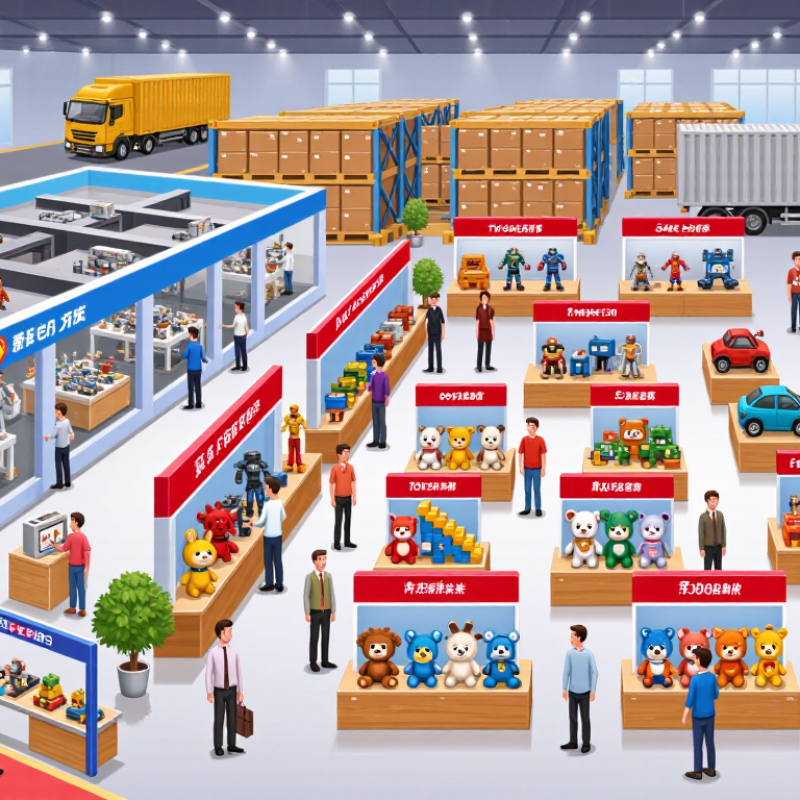
Where to Shop China Top Toys for Global Buyers? This question matters when quality, pricing, and reliable delivery shape every purchasing decision. China offers a vast toy ecosystem, from factory-direct suppliers in Guangdong to specialized wholesale markets in Yiwu. Each sourcing route has different strengths, risks, and service expectations.

For many importers, shopping toys starts with identifying the right supplier, not simply finding the lowest price. Established manufacturers may provide product samples, customization, stable production, and clearer export documentation. Wholesale platforms can offer broader selections, but product information may require careful verification. Look for factory experience, transparent business details, responsive communication, and consistent sample quality. Small details matter. A loose wheel, unclear age label, or weak carton can create expensive problems later.

Request samples before placing larger orders. Check materials, stitching, paint coverage, moving parts, packaging, and instructions. Confirm applicable safety requirements for your destination market, such as EN 71, ASTM F963, or other recognized standards. Testing should come from qualified laboratories, and documents should match the exact product model. Compliance is not a decorative certificate.

Buyers should also review minimum order quantities, production schedules, payment terms, inspection options, and after-sales support. Visiting a market or factory can reveal practical details that online listings hide. Still, one visit does not guarantee long-term performance. Suppliers can change materials or subcontract production without clear notice, so written specifications and independent inspections remain valuable. Mistakes happen, even with experienced teams. The strongest sourcing process allows questions, verification, and correction before goods leave China.

Where to Shop China Top Toys for Global Buyers?

What Makes China a Leading Source of Toys for Global Buyers?

Where to Shop China Top Toys for Global Buyers?

China remains a leading toy source because production scale, supplier density, and export infrastructure work together. According to UN Comtrade data, China exported more than US$30 billion in toys under HS 9503 in 2023. This scale gives international buyers wider choices, from educational sets to outdoor play products.

Scale matters. Manufacturing clusters shorten development cycles and support smaller design changes. Many factories can adjust colors, packaging, materials, and order quantities for different markets. China’s established ports and freight networks also help buyers manage regular shipments. The World Bank’s 2023 Logistics Performance Index ranked China 19th globally, reflecting strong trade-handling capability.

Price alone is not proof of value. Circana’s 2023 global toy report recorded a 7% decline across major toy markets, increasing pressure on retailers to control inventory. Experienced buyers should compare sampling quality, production records, testing documents, and delivery performance. Independent factory audits and laboratory reports remain important for meeting destination-market safety rules.

The process is not perfect. A low quotation can hide weak materials or costly delays. Clear specifications reduce that risk. Buyers should verify age grading, chemical limits, labeling, and packaging requirements before placing orders. Reliable sourcing depends on evidence, not attractive product photos.

Where to Shop China Top Toys for Global Buyers?

China’s Toy Export Value Shows Its Leading Global Supply Role

China is a leading sourcing hub for global toy buyers because of its large manufacturing base, mature supplier networks, flexible production capacity, and well-developed export logistics. The chart shows China’s annual toy export value, which reached a high level during the global demand surge in 2021–2022 before normalizing in 2023.

Data source: China Customs and industry statistics reported by the China Toy and Juvenile Products Association; values are rounded estimates in USD billions.

How to Identify Reliable China Toy Manufacturers and Suppliers

Where to Shop China Top Toys for Global Buyers?

Reliable China toy manufacturers are found through verified sourcing platforms, trade fairs, and referrals from experienced buyers. Do not judge a factory by polished photos alone. Request its business license, production address, export history, and product certificates. Confirm that the legal company name matches every document. This simple check prevents costly confusion.

Ask for samples before discussing large orders. Inspect paint adhesion, sharp edges, battery compartments, stitching, and packaging strength. For different markets, request relevant safety testing, such as EN 71 or ASTM F963 reports. Check whether the reports match the exact toy model, materials, and factory. A supplier may share an old certificate. That is a warning. Discuss minimum order quantities, lead times, defect handling, payment stages, and inspection rights in writing. A factory audit can reveal crowded storage, weak quality controls, or outsourced production.

Tips: Compare three suppliers using the same questions. Request a live video tour, but remember, a prepared room proves little. Hire an independent inspection company before shipment. Keep one approved sample for comparison. No checklist is perfect. I would also leave time for rework, because even a trusted supplier can miss small details during a busy season. Reliable partnerships grow through clear records, repeated checks, and honest responses to uncomfortable questions.

Which China Toy Markets and Platforms Serve International Customers?

International buyers can source toys through three main channels: physical markets, trade fairs, and online B2B platforms. Yiwu is useful for small gifts, seasonal items, and mixed cartons. Chenghai is stronger for electronic, construction, and molded plastic toys. Yangzhou remains important for plush products. These clusters offer dense supplier networks, sample rooms, packaging services, and export agents. However, product quality varies between nearby factories. A busy showroom is not proof of reliable production.

China Customs data, reported by the China Toy and Juvenile Products Association, recorded toy exports of about US$31.1 billion in 2023. The figure shows strong manufacturing capacity, but it does not remove buyer risks. Online B2B platforms help international customers compare specifications, minimum order quantities, certifications, and production photos. Buyers should request current test reports and verify whether documents match the exact model. Old certificates can look convincing.

Trade fairs remain valuable for professional sourcing. Buyers can touch materials, inspect paint coverage, and discuss carton dimensions directly. The China Toy and Juvenile Products Association also reported that China’s toy industry serves more than 200 export markets, highlighting broad international reach. Still, one visit is not enough. A better process includes factory verification, pre-production samples, random inspection, and written terms for defects. Some suppliers respond quickly but explain poorly. That is a warning, not a minor inconvenience. Small importers should also calculate freight, duties, testing, and replacement costs before comparing prices.

What Standards and Certifications Should Imported Toys Meet?

When global buyers source toys from China, product quality starts with the correct market standard. A toy for the United States may need testing under ASTM F963 and requirements linked to the CPSIA. European sales usually require EN 71 testing and CE marking. The UK may require UKCA arrangements. Other markets often reference ISO 8124. One certificate does not cover every destination.

Reliable suppliers should provide recent laboratory reports, material declarations, age grading evidence, and traceable batch information. Testing should cover small parts, sharp edges, flammability, heavy metals, restricted chemicals, and mechanical strength. For electronic toys, buyers should also check battery safety and electromagnetic requirements. Ask whether the report matches the exact model, materials, and production version. A similar-looking report is not enough.

Tips: Confirm the destination country before ordering samples. Request test reports from an accredited laboratory. Inspect warning labels, packaging, and instructions in the required language. Keep sealed samples for comparison during production. I have seen buyers focus on colorful packaging while overlooking loose components. That mistake can delay customs clearance. Standards also change, so recheck requirements before each large order. No supplier should promise universal compliance without naming the market, product category, and applicable rules.

Where to Shop China Top Toys for Global Buyers? - What Standards and Certifications Should Imported Toys Meet?

Toy Category Typical China Sourcing Area Key Product Risks United States Requirements European Union Requirements United Kingdom Requirements Important Buyer Documents
Plastic building sets Guangdong toy manufacturing clusters Small parts, sharp edges, plastic chemical migration, weak connections CPSIA, ASTM F963, tracking label, and a Children’s Product Certificate when applicable Toy Safety Directive 2009/48/EC, relevant harmonised EN 71 standards, CE marking, and EU Declaration of Conformity Toy Safety Regulations, relevant BS EN 71 standards, UKCA or accepted CE marking according to current market rules Test report, material declaration, age-grade assessment, artwork approval, and batch traceability records
Plush and stuffed toys Guangdong and Zhejiang soft-toy production areas Flammability, loose eyes or seams, stuffing contamination, fiber composition ASTM F963, CPSIA lead and phthalate limits, flammability rules, and applicable tracking-label requirements EN 71-1 mechanical and physical properties, EN 71-2 flammability, EN 71-3 migration of certain elements, and CE marking BS EN 71 testing, chemical and flammability compliance, and required conformity marking Fiber-content information, stuffing declaration where required, flammability results, and production inspection records
Electronic and remote-control toys Shenzhen, Dongguan, and other electronics manufacturing hubs Battery overheating, electric shock, radio interference, charging hazards, data privacy ASTM F963, CPSIA, FCC requirements for applicable radio devices, battery transport rules, and electrical safety evaluation Toy safety requirements plus applicable EMC, Radio Equipment, RoHS, WEEE, and battery obligations Toy safety requirements plus applicable UK electromagnetic compatibility, radio equipment, RoHS, and waste regulations Battery specification, charger information, EMC or radio test report, user instructions, warnings, and software or privacy documentation where relevant
Wooden puzzles and learning toys Zhejiang, Jiangsu, and Fujian wooden-product areas Splinters, detachable pieces, paint or coating chemicals, choking hazards ASTM F963, CPSIA lead limits for surface coatings and accessible substrates, and small-parts requirements EN 71-1, EN 71-3, applicable coating and chemical restrictions, CE marking, and age warnings BS EN 71, chemical safety controls, conformity assessment, and appropriate warnings Wood and coating material declarations, dimensional inspection, chemical test report, and packaging artwork
Ride-on toys and scooters Guangdong, Zhejiang, and Jiangsu manufacturing areas Stability, falls, structural failure, pinch points, braking and steering performance ASTM F963 and product-specific CPSC requirements; bicycle-style products may require additional applicable standards Toy Safety Directive and relevant EN 71 provisions, with additional assessment for mechanical and structural hazards Toy safety regulations and relevant BS EN 71 provisions, including stability and mechanical safety assessment Load and stability test results, assembly instructions, user-age and weight limits, warning labels, and inspection records
Dolls and role-play sets Guangdong and Zhejiang toy production areas Small accessories, magnets, phthalates, cosmetic-like components, and textile safety ASTM F963, CPSIA lead and phthalate limits, magnet safety requirements where applicable, and tracking information EN 71 series, REACH chemical restrictions, CE marking, and additional magnet or cosmetic-product assessment where relevant BS EN 71, UK chemical restrictions, conformity marking, and warnings for small parts or magnets Accessory inventory, chemical testing, magnet assessment, textile information, age grading, and final packaging review
Arts, crafts, and science kits Guangdong, Zhejiang, and Jiangsu educational-product suppliers Chemical exposure, sharp tools, powders, liquids, magnets, and misleading age classification ASTM F963, CPSIA, applicable labeling rules, and additional requirements for chemical or experimental components Toy Safety Directive, EN 71 testing, REACH restrictions, clear instructions, hazard warnings, and CE marking Toy safety regulations, BS EN 71, chemical restrictions, safety instructions, and conformity marking Complete ingredient or material list, safety data where applicable, instructions, warnings, age-grade rationale, and test reports
Water and bath toys Guangdong and coastal manufacturing clusters Water retention, microbial growth, mold, leakage, small parts, and chemical migration ASTM F963, CPSIA chemical limits, physical and mechanical safety testing, and appropriate warnings EN 71-1, EN 71-3, REACH restrictions, hygiene-related risk evaluation, and CE marking BS EN 71, chemical restrictions, hygiene and drainage assessment, and conformity marking Water-drainage design review, material test report, cleaning instructions, warnings, and production quality records
Buyer verification checklist: Confirm the destination market, product age grade, applicable toy standard, chemical restrictions, test laboratory scope, conformity marking, importer information, traceability details, warnings, instructions, and shipment-specific inspection records before placing a commercial order.

How to Compare Prices, Order Samples, and Arrange Global Shipping?

Where to Shop China Top Toys for Global Buyers?

How to Compare Prices, Order Samples, and Arrange Global Shipping?

A reliable toy supplier should provide clear product details, factory information, and export documents. Ask for the unit price at different quantities, not just the lowest quotation. Check whether packaging, molds, labeling, and inspection fees are included. A cheap offer can become expensive after revisions. Request a written quotation with currency, payment terms, production time, and delivery conditions.

Order samples before placing a large purchase. Test the toy’s materials, moving parts, paint finish, instructions, and package strength. Photograph each defect and record the agreed changes. One sample may look excellent, while later production differs slightly. That happened during a small sourcing project I reviewed. The buyer trusted a video and skipped a second sample. It cost extra time.

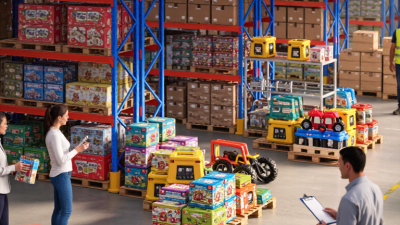
Shipping requires practical details. Confirm the carton size, gross weight, loading quantity, and shipping port. Compare sea freight, rail, air freight, and courier options according to urgency and budget. Ask whether the price covers export handling, customs paperwork, insurance, and destination delivery. The buyer remains responsible for checking safety standards, age labels, chemical limits, and import rules in each target market. Never assume the supplier knows every local requirement. A pre-shipment inspection can verify quantity and packaging, but it cannot replace legal review.