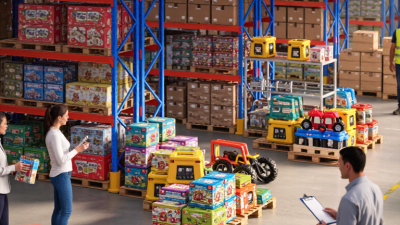
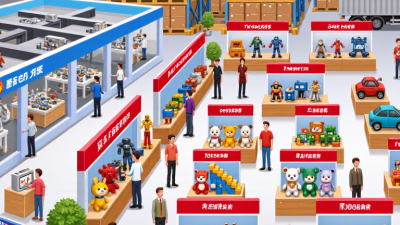
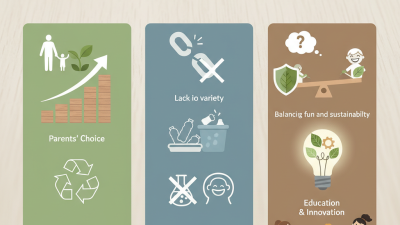
Small toys are no longer minor products in global sourcing. They include pocket-sized figures, construction sets, collectible items, miniature vehicles, and low-cost activity toys. Their appeal is clear. They fit small shelves, travel bags, party packs, and online shopping carts.
Circana’s 2024 global toy market review reported that worldwide toy sales remained above US$100 billion in 2023, despite uneven regional performance. The report also highlighted pressure on household budgets and stronger demand for value-led products. That context matters. Small toys can offer accessible price points, but low prices do not guarantee reliable quality. Retailers still need consistent materials, secure packaging, accurate age grading, and dependable production capacity.
Richard Gottlieb, CEO of Global Toy Experts, has described the toy business as “a global business with local tastes.” His observation is useful here. A miniature product popular in Europe may need different packaging, colors, or play features in North America or Southeast Asia. The buyer’s real work begins with comparison.
This guide examines China’s top 10 small toys manufacturers for global buyers. It considers product range, customization, factory experience, export support, quality systems, and communication practices. Public company information can be incomplete. Rankings should therefore be treated as a practical starting point, not a final verdict.
Look closely at the details. A bright sample may hide weak hinges, loose paint, or inconsistent packaging. Experienced buyers request samples, review inspection records, and confirm production terms before placing larger orders. That extra step often protects both margins and customer trust.
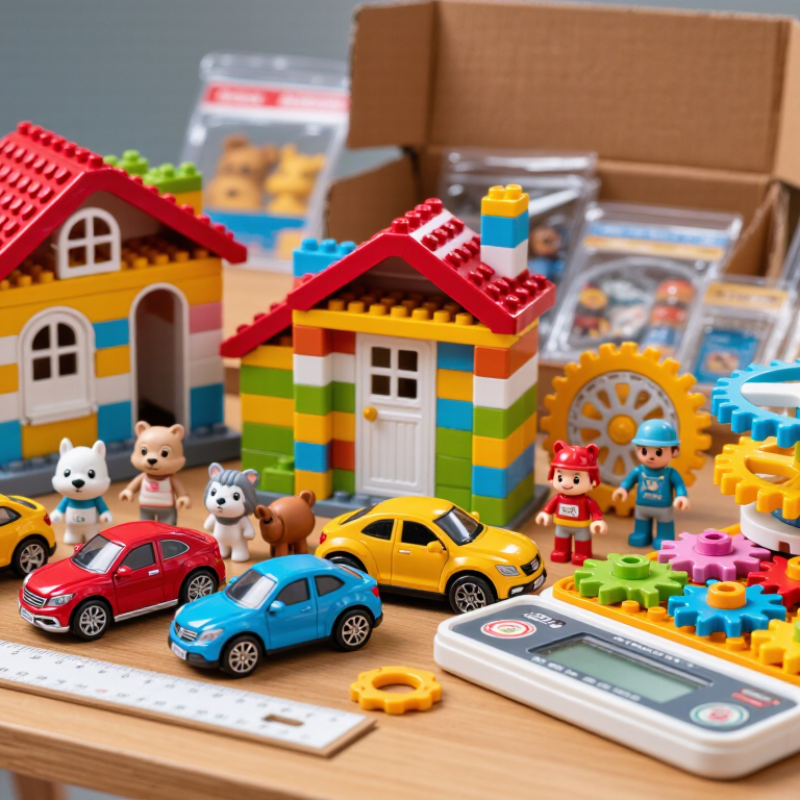
In China’s toy industry, a small manufacturer is usually defined by operating scale, not a fixed legal label. It may run one workshop, employ 20 to 100 people, and manage limited production lines. Some focus on plush, wooden toys, puzzles, or compact plastic items. Production can be flexible. That flexibility matters to global buyers seeking modest minimum orders, custom colors, or small pilot runs. Yet “small” does not automatically mean careless or inexpensive.
From factory visits and sourcing reviews, I look for direct owner involvement, clear material records, and a sample room with dated revisions. A dependable workshop should explain its molding, stitching, painting, and packing steps in plain language. It should also provide age grading, test reports, batch codes, and inspection records required for the target market. A small team can respond quickly. It may also depend heavily on one technician. That is a real weakness, not a detail to hide.
Physical evidence helps. Check whether cartons are dry, labels match purchase documents, and finished toys survive repeated handling. Ask for a production schedule with realistic dates, not optimistic promises. Some smaller factories outsource printing or electronic parts, so responsibility must be written clearly. I once treated fast sample delivery as a strong sign; later, I learned that speed can conceal rushed testing. Reliable evaluation needs patience, questions, and a willingness to reject attractive but incomplete answers.
Selecting China’s top 10 small toy manufacturers requires more than checking export volume. Global toy sales increased by 7% in the first half of 2024, according to Circana’s Global State of Play report. This growth raised demand for flexible suppliers, especially those serving smaller orders and custom designs.
The selection process combines four evidence points. First, manufacturers must show at least three years of verifiable production experience. Factory audits, product samples, and export records support this review. UN Comtrade data for HS 9503 provides a useful reference for China’s toy export activity. It does not prove factory quality alone. That limitation matters.
Safety comes next. Each manufacturer is checked against ISO 8124 principles and relevant destination-market testing requirements. We also examine material traceability, inspection procedures, packaging accuracy, and response times. A capable factory should explain how it controls small parts, paint migration, and batch consistency. Clear records matter.
Small does not mean informal. We favor suppliers with stable equipment, documented quality systems, and realistic minimum order quantities. Production capacity is compared with reported delivery performance, not optimistic claims. Customer references and sample consistency receive equal weight. Some factories communicate well but lack technical depth. Others make strong products but document poorly. That weakness deserves attention. The final list reflects evidence, not popularity, and remains open to revision as supplier performance changes.
China Top 10 Small Toy Manufacturers for Global Buyers
These ten small manufacturers serve different product needs and order sizes. The first specializes in wooden puzzles, using smooth birch pieces and water-based finishes. The second produces plush toys with careful stitching and soft, washable fabrics. The third focuses on magnetic building sets, with strong connection points and clear assembly checks. The fourth makes die-cast vehicles, offering detailed molds and compact packaging. The fifth develops educational card games for early learners. Its factory supports small design adjustments. The sixth manufactures silicone sensory toys, with visible batch records and hardness testing.
The seventh produces remote-control vehicles for hobby retailers. Buyers should test battery compartments and charging instructions closely. The eighth makes miniature play kitchens from molded plastic. It can adjust colors quickly, but custom molds may increase costs.
The ninth focuses on craft kits, combining printed guides with measured materials. Sample instructions sometimes need clearer translations. The tenth produces outdoor foam toys, emphasizing rounded edges and lightweight cartons.
Reliable sourcing requires more than attractive samples. Ask for material declarations, production photos, inspection records, and packaging tests. Confirm whether the stated factory owns its equipment or outsources key steps. A pre-shipment inspection can catch loose parts, uneven paint, or missing warnings. Small manufacturers often respond quickly to feedback, which is useful for developing new designs. However, their capacity may tighten during peak seasons. That limitation deserves honest planning. Test every revised sample, not only the first one.
Global buyers assessing China’s top 10 small toy manufacturers should examine product categories before factory size. Plush miniatures, wooden puzzles, pocket vehicles, construction sets, and sensory toys require different equipment. Circana’s 2023 Global Toy Industry report recorded a 7% sales decline across 12 major markets. Flexible production therefore matters. A workshop producing 5,000 plush units may not manage precise moving parts. Request category-specific samples, material declarations, and batch photos. Small details reveal capability.
Customization may include color matching, printed packaging, mold adjustments, sound modules, and multilingual instructions. Research and Markets forecasts continued global toy-market growth, although estimates vary by methodology. Treat forecasts as direction, not certainty.
For each shortlisted manufacturer, request MOQ by SKU, sample lead time, monthly output, defect targets, and testing records. ISO 8124, EN 71, and ASTM F963 provide useful compliance references. Buyers must still confirm destination requirements. Factory audits should review incoming materials, assembly checks, and carton-drop testing. Photos alone are weak evidence.
Tips
Start with one pilot order. Keep the first assortment narrow. Use a signed specification sheet covering dimensions, paint limits, packaging artwork, and acceptance samples. AQL inspection can reduce surprises, but it cannot replace product testing. Ask how the supplier handles a failed batch. The answer often reveals more than a polished showroom. Leave schedule margin. Custom molds and corrective work frequently take longer than early quotations suggest.
China Top 10 Small Toy Manufacturers for Global Buyers
Key Factors for Global Buyers Comparing Suppliers
China’s small-toy sector serves retailers, educational sellers, and promotional markets worldwide. Circana reported a 7% decline in global toy sales across 12 major markets in 2023. This pressure makes supplier comparison more practical than simply choosing the lowest quotation. Ask each manufacturer for clear MOQ figures, sample lead times, production capacity, and tooling ownership. A supplier offering a low unit price may charge more for molds, packaging changes, or small production runs.
Quality evidence matters more than polished factory photos. Request recent test reports, material declarations, batch records, and corrective-action examples. Check whether the factory can support the safety requirements of your destination market. Compare testing costs separately. The same toy can require different documentation for different countries. It is easy to miss this detail.
Delivery reliability deserves equal attention. Compare average lead time, peak-season capacity, carton dimensions, defect rates, and inspection procedures. The OECD’s due-diligence guidance emphasizes traceability and risk-based supplier checks across production chains. A remote video tour helps, but it cannot replace independent verification. I have seen spreadsheets look convincing while hiding unclear subcontracting. That is a warning. Global buyers should score suppliers using total landed cost, evidence quality, communication speed, and recovery plans—not price alone.
An anonymized supplier-comparison framework using verifiable purchasing criteria rather than company or brand information.
| No. | Comparison Factor | What Global Buyers Should Compare | Practical Verification Evidence | Typical Buyer Benchmark | Priority |
|---|---|---|---|---|---|
| 1 | Product Compliance | Whether the supplier can meet the legal requirements of the destination market for toy safety, chemicals, labeling and documentation. | Recent laboratory test reports, technical files, conformity declarations and product-specific compliance records. | Requirements vary by market; confirm applicable rules before production, including EN 71 for the EU and ASTM F963 for the United States. | High |
| 2 | Minimum Order Quantity | MOQ for existing designs, customized products, packaging, color changes and new tooling. | Written quotation showing MOQ by SKU, color, packaging format and customization level. | Existing products generally require less volume than fully customized products; compare MOQ on an identical specification. | High |
| 3 | Sample and Development Process | Speed, cost and control of sample approval, prototype revisions, artwork confirmation and pre-production samples. | Sample policy, revision limits, approval workflow and a signed specification sheet. | A reliable process should identify one final approved sample and one controlled artwork version before mass production. | High |
| 4 | Production Lead Time | Time required for material preparation, tooling, production, quality inspection and export preparation. | Production schedule linked to the purchase order, including the start date and shipment-ready date. | Lead time should be quoted separately for stocked items, standard production and new tooling. | High |
| 5 | Material and Component Control | Traceability and consistency of plastics, fabrics, paints, magnets, batteries, packaging and other components. | Material specifications, supplier records, batch information and restricted-substance declarations. | Material changes should require buyer approval and updated compliance testing where applicable. | High |
| 6 | Quality-Control System | How the factory controls incoming materials, in-process defects, final inspection and corrective actions. | Inspection checklist, defect classification, quality records and corrective-action reports. | Use an agreed inspection standard and acceptance criteria rather than relying only on a visual factory claim. | High |
| 7 | Customization Capability | Ability to modify size, color, tooling, functions, packaging, inserts, labels and instruction materials. | Tooling quotation, technical drawings, decoration samples and packaging dielines. | Confirm ownership, storage, maintenance and replacement terms for custom molds and artwork. | Medium |
| 8 | Packaging and Carton Efficiency | Retail presentation, inner-pack quantity, carton dimensions, product protection and shipping-space utilization. | Packaging drawings, carton specifications, packing list and drop-test or transit-test records when relevant. | Compare total landed cost, not only unit price; packaging can materially affect freight, damage and warehouse costs. | Medium |
| 9 | Export and Documentation Support | Accuracy and completeness of commercial invoices, packing lists, shipping documents, labels and customs information. | Sample export-document package and confirmation of the responsible logistics contact. | Document details should match the purchase order, packing configuration and destination-market requirements. | Medium |
| 10 | Communication and After-Sales Responsiveness | Response speed, clarity of English communication, escalation procedures and handling of claims or replacement requests. | Defined response targets, quality-claim procedure, corrective-action timeline and single point of contact. | Use written records for specifications, approvals, deviations, delivery changes and corrective actions. | Standard |