
Golf Divot Tools may look small, but their design affects course care, putting surfaces, and player etiquette. In 2026, golfers can choose from traditional two-prong tools, needle-style repairers, magnetic models, brush-integrated tools, and multifunctional designs. Each type suits a different situation.
Dr. Micah Woods, a respected turfgrass scientist and golf course advisor, often emphasizes, “The grass is the boss.” That simple principle matters here. A suitable tool should lift compressed turf gently, avoid tearing healthy roots, and fit naturally in one hand. On a firm green, a narrow needle tool may create cleaner repairs. On softer turf, a wider two-prong model can offer better control. Small details matter.
Practical testing also reveals differences. Some magnetic tools attach securely to a glove or belt. Others become awkward when wet. Brush heads can remove soil from shoe grooves, but they may add bulk. Recycled metal and durable polymers are gaining attention, although sustainability claims still require careful checking.
This guide examines the top Golf Divot Tools types expected to stand out in 2026. It considers repair performance, comfort, portability, durability, and turf sensitivity. Price alone is not enough. A polished tool can still perform poorly.
The honest point is simple. No divot tool fixes careless technique. Even experienced golfers sometimes pull turf upward too aggressively. Better habits matter more than shiny finishes.
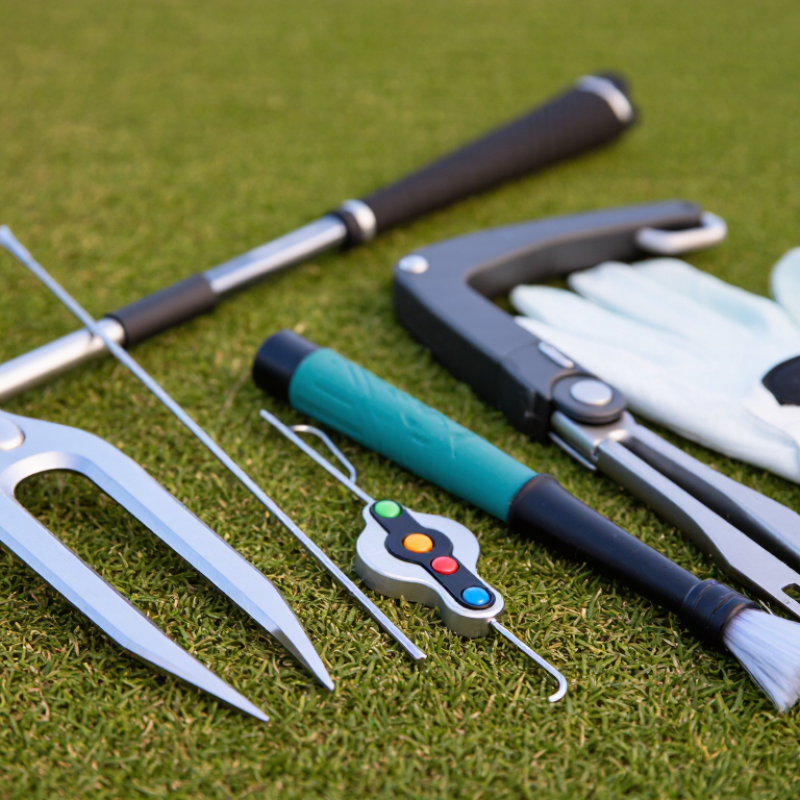
A golf divot tool is a small implement for repairing ball marks on putting greens. Its purpose is simple: lift compressed turf and restore a smoother surface. Common types include two-prong forks, single-prong needles, switchblade tools, and compact multi-tools. Two-prong models offer familiar control. Needle tools can create smaller entry points. Switchblade designs protect the repair tip inside the handle.
This function matters because putting quality depends on consistent turf conditions. The R&A’s Golf Around the World 2023 report recorded 66.6 million golfers across 206 countries. That participation level creates millions of chances for surface damage. A practical tool should fit securely in the hand and avoid tearing healthy roots. A flat repair edge also helps users press loose soil gently. Small details matter.
I have used narrow tools that entered hard greens cleanly. I have also seen careless repairs widen a mark. Technique still matters more than appearance. The USGA’s turf guidance emphasizes repairing ball marks promptly, before the surrounding grass dries or collapses. Magnetic holders and clip-on designs improve access during play. However, extra features can add weight and distraction. The best 2026 type may be the one a golfer actually carries and uses correctly. That assumption deserves testing.
Golf participation continues to support demand for compact course-care tools. The R&A’s Golf Around the World 2023 report recorded 66.6 million golfers across 206 countries. The National Golf Foundation also reported 28.1 million on-course golfers in the United States during 2023. These figures show a broad user base, from casual players to serious competitors. Their needs are not identical.
Single-prong tools remain practical for firm greens. One narrow tine enters the turf with less surface disturbance. Double-prong tools offer better control on softer surfaces. They can lift raised edges gently, rather than tearing the center. Folding switchblade tools suit players who prefer safer storage. Their retractable forks reduce pocket damage. Small magnetic models add convenience, but weak magnets can disappoint.
Material choice deserves more attention in 2026. Stainless steel provides strength and resists moisture. Reinforced polymer reduces weight and feels warmer in cold weather. Wooden tools look natural, yet they may swell after repeated exposure to wet grass. That part is easy to overlook. A comfortable handle also matters during hurried repairs beside a busy putting line. Test the grip with one hand. If the fork bends, replace it. No tool is perfect, and even skilled players sometimes repair a pitch mark too aggressively. The best design encourages a light lift, careful tapping, and minimal damage.
Two-prong metal divot tools remain dependable for firm greens. Stainless steel offers corrosion resistance and a solid feel. Aluminum reduces weight, but thin arms may bend under pressure. Their narrow tines enter the turf cleanly without tearing nearby roots. A textured handle also improves control during wet rounds. Some models include a magnetic ball marker. Useful, but easy to lose.
Single-prong tools suit golfers who prefer a smaller repair point. Their pointed steel or reinforced polymer tine lifts compacted grass with less surface disturbance. Polymer versions feel warmer and weigh less. However, they can flex when the green is unusually hard. That weakness matters during frequent play. I have found rounded handles easier to grip than flat metal plates.
Multi-function tools combine divot repair, ball marking, and club cleaning features. Stainless steel bodies provide durability, while rubber or recycled composite grips soften contact with the hand. Retractable designs protect the tine inside a pocket. This is safer. Yet moving parts can collect sand and require cleaning.
Wooden or bamboo tools offer a natural appearance and low material weight. They may absorb moisture, swell, or split over time. That trade-off deserves honest attention.
In practical use, the best design balances tine strength, grip comfort, pocket safety, and simple maintenance.
What Are the 2026 Top Golf Divot Tools Types?
How to Choose the Right Golf Divot Tool
Golf divot tools usually fall into four types: single-prong, two-prong, switchblade, and multifunction designs. Single-prong tools suit firm greens and controlled repairs. Two-prong tools feel faster on softer turf. Switchblade models protect fingers and fit neatly inside a pocket. Multifunction tools may include a ball marker, groove cleaner, or magnetic clip.
Choose by turf condition, not appearance. A sharp, narrow tine can repair compact marks with less lifting. Wider prongs may work better in loose soil, but they can disturb healthy grass. The USGA recommends repairing pitch marks from the sides, pushing turf inward instead of lifting it. That small movement matters. I once used excessive force on a dry green and widened the damage.
Usage is also growing. The National Golf Foundation reported 45 million on-course golfers in the United States during 2023. The R&A’s Golf Around the World report recorded 66.6 million on-course golfers across 206 countries. These figures support practical, durable tool design, although they do not measure divot-tool sales directly. Look for corrosion-resistant metal, a comfortable grip, and a mechanism that locks securely. Avoid overly complicated parts. More functions can mean more failure points. A simple tool is sometimes the better choice.
| Divot Tool Type | Typical Construction | How It Repairs a Ball Mark | Main Advantages | Potential Limitations | Best For | Key Buying Considerations |
|---|---|---|---|---|---|---|
| Single-Prong Tool | One pointed metal or hardened plastic prong with a compact handle. | The prong is inserted at the edge of the indentation, and the surrounding turf is gently pushed inward. | Lightweight, simple, inexpensive, and easy to carry. | Requires careful technique; twisting or lifting can damage roots. | Golfers who prefer minimal equipment and precise control. | Choose a comfortable grip and a corrosion-resistant prong with a smooth, durable tip. |
| Two-Prong Tool | Two parallel prongs, usually made from metal or reinforced polymer, joined to a handle. | Both prongs are placed around the mark, allowing the player to work a wider area with small inward movements. | Fast, stable, widely compatible with common putting-green conditions. | A large or poorly spaced pair of prongs may disturb more turf than necessary. | Most recreational players and golfers seeking an all-purpose option. | Look for balanced spacing, rounded edges, a secure grip, and a compact profile. |
| Three-Prong Tool | Three closely arranged prongs attached to a larger ergonomic handle. | Multiple contact points let the golfer loosen and level a broader indentation in several small steps. | Good stability and efficient coverage for larger or firmer marks. | Can be less precise in tight areas and may be heavier than simpler designs. | Players who regularly encounter deep marks or compacted putting surfaces. | Prioritize a narrow prong layout, moderate weight, and a handle that remains comfortable when wet. |
| Switchblade or Retractable Tool | Folding or sliding prong mechanism housed inside a compact body. | The prongs extend for repair and retract for storage, reducing the chance of snagging pockets or golf bags. | Portable, pocket-friendly, and safer to store than exposed-prong designs. | Moving parts can loosen, collect debris, or fail if the locking mechanism is weak. | Golfers who carry tools in a trouser pocket or small accessory pouch. | Check the lock, hinge strength, release button, and ease of cleaning before purchase. |
| Magnetic Ball-Marker Tool | A divot-repair body combined with a removable magnetic ball marker. | The repair prongs work normally while the marker remains attached to the handle through a magnet. | Combines two green accessories and makes the marker quick to access. | The tool may be bulkier, and magnets can attract metal debris over time. | Players who want fewer separate accessories on the putting green. | Confirm strong magnetic retention, comfortable handling, and a marker that is easy to remove. |
| Green-Reading Combination Tool | Divot tool integrated with accessories such as a level, alignment aid, or removable marker. | The prongs repair the mark; the additional feature supports putting preparation or alignment. | Versatile and useful for golfers who value multifunctional equipment. | Extra features can increase size, weight, and cleaning requirements. | Practice-focused golfers and players who prefer multipurpose tools. | Select only functions you will actually use; avoid accessories that make the grip awkward. |
| Wooden or Recycled-Fiber Tool | Handle made from wood or composite fiber with a metal or reinforced repair tip. | The rigid tip performs the repair while the natural or fiber handle provides a comfortable grip. | Distinctive feel, potentially lower plastic content, and comfortable handling. | Material may absorb moisture, split, or wear faster if not sealed and maintained. | Golfers who value natural materials or reduced use of conventional plastics. | Inspect the finish, joint strength, moisture resistance, and replaceability of the repair tip. |
| Heavy-Duty Metal Tool | Solid or reinforced metal body, commonly using corrosion-resistant alloys or coated steel. | Rigid prongs penetrate firm turf and allow controlled pressure around a deep ball mark. | Durable, stable, and suitable for frequent use in hard ground. | Heavier to carry and may damage delicate turf if used aggressively. | Frequent players, golf-course staff, and golfers playing on firm surfaces. | Choose corrosion resistance, a comfortable handle, moderate weight, and prongs that are not excessively sharp. |
Golf divot tools in 2026 include two-prong, foldable, and multi-purpose designs. Their shapes differ, but correct use remains more important than appearance. A divot tool repairs the green without tearing healthy roots. Insert the prongs beside the damaged mark, not into its center. Then push the surrounding turf inward with gentle movements. Avoid lifting the soil. That mistake can damage grass crowns and slow recovery.
Work around the mark in small sections. Press the surface lightly with your putter or shoe afterward. The repaired area should look level, not raised. On firm greens, use less force. On soft greens, avoid repeated probing. I have sometimes repaired a mark too aggressively, thinking extra pressure helped. It did not. Careful touch is harder to learn, but much safer.
Clean the tool after each round. Soil and grass can collect between the prongs or inside folding joints. Rinse it with clean water, then dry it fully before storage. A soft brush removes stubborn dirt without scratching the metal. Check the prongs for bending, especially after accidental drops. Bent points can tear turf. Keep the tool in a dry pocket or ventilated compartment. Moisture left overnight may create rust, even when the tool looks clean. Personally, I still forget this after rainy rounds.
How to use: Insert the tines behind the raised edge of the pitch mark and push the surrounding turf inward toward the center. Avoid lifting the soil upward, as this can damage the roots.
Care: Remove grass and soil after each round, rinse the tool with clean water, dry it thoroughly, and apply a small amount of lubricant to moving parts on fold-out models. The tine counts shown represent common configurations; exact designs may vary.